From Sample Case to Swatch Book: Showing Materials Before the Sale
A material sample lets customers compare texture, color shifts, and natural variation before buying, while helping makers set clear expectations.
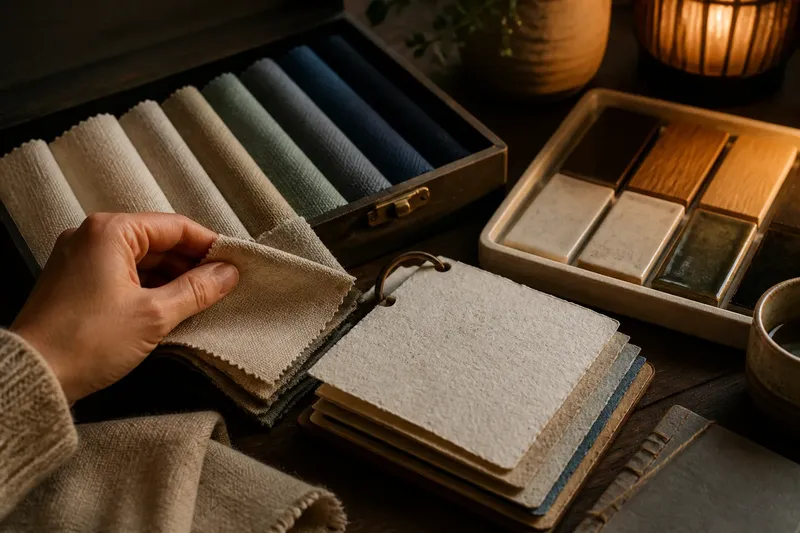
A customer can understand a linen blend’s color from a photograph and still wonder how it feels in the hand. A physical material sample answers a different question: what is this surface actually like, and how much does it vary? For a small maker, that little piece of fabric, paper, wood, or clay can turn an unseen quality into something a buyer can judge for themselves.
What can a material sample communicate?
A sample is more than a miniature version of a finished product. It offers evidence of qualities that are difficult to translate into words or images: a rough edge, a soft nap, a cool surface, a subtle grain, or a color that changes under different light.
It also helps distinguish qualities that might otherwise blur together. Two cottons may both be described as “lightweight,” yet one can feel crisp and the other drapey. A customer comparing them can make a choice based on the hand and movement, not just a label.
Samples are especially useful when the material itself has variation. Handmade paper may show fibers; wood may carry different grain patterns; glaze may settle unevenly. Showing a representative piece makes that variation part of the conversation before the sale, rather than a surprise when the finished item arrives.
How did makers use sample collections?
Material samples have long served as portable reference collections. A craftsperson, merchant, or workshop could carry pieces to a customer, keep them in a box, or arrange them in a book. The format made comparison possible without moving full bolts of cloth, sheets of paper, or larger stock.
The useful idea is not the age of the format but its purpose: a sample collection turns a material range into something people can handle side by side. A swatch book makes several options easy to browse; a sample case can travel to a client or event; a few loose pieces may suit a maker with only a small set of choices.
For a contemporary small studio, the collection can be modest. A book of paper stocks, a ring of textile swatches, or a tray of wood finishes gives customers a direct point of comparison. The collection need not imitate a large supplier’s catalog. It should represent the actual materials the maker is prepared to offer.
How should you choose and present samples?
Start with the choices a customer is likely to make. If color is the main decision, samples need to make color differences easy to see. If softness, stiffness, or surface texture matters more, give each piece enough area to handle without obscuring its character.
- Use a representative piece. Choose material that resembles what will go into the finished work, rather than a specially attractive offcut.
- Show meaningful differences. Arrange options so a person can compare qualities that affect their choice, such as sheen, weave, grain, or firmness.
- Give each sample a clear name. A short material name or finish description is more useful than a private studio code.
- Keep samples attached or easy to match. A swatch ring, labeled sleeve, or divided tray helps prevent a piece from being separated from its description.
- Explain natural variation plainly. A note can say that grain, fiber, or glaze varies from piece to piece, while avoiding a promise that every finished item will match the sample exactly.
Imagine a maker offering a small run of hand-bound notebooks in three paper stocks. She places a labeled sheet of each stock in a slim folder and leaves enough margin for customers to feel the surface and see how ink sits on it. A buyer comparing the sheets can choose the paper that suits their writing habits; the maker can then use the chosen stock while explaining that handmade sheets may differ slightly in fiber pattern.
What does a sample not tell you?
A swatch can represent a material without showing the full experience of a finished object. A small textile square may feel different from a cushion cover stretched over an insert. A wood chip does not show how a tabletop’s grain will run across a broad surface.
Use the sample to communicate what it can show, and describe the remaining uncertainty in specific terms. If scale, drape, or pattern placement matters, a larger mock-up or a photograph of a finished piece may help alongside the sample. These tools complement one another: the photograph conveys form, while the physical piece communicates touch and surface.
Lighting also changes what a sample appears to be. A color viewed beside a sunny window may read differently under a warm lamp. If a customer is choosing a shade for a particular room or setting, encourage them to view the sample in the place where the finished item will live.
How do you keep a sample collection useful?
Keep the collection aligned with materials you can currently source and work with. When a supplier changes a finish or a material is no longer available, update the sample and its description so a customer is not choosing from an outdated option.
Store pieces in a way that preserves the quality they are meant to show. A fabric swatch should not be crushed into a tight bundle; paper samples should stay flat; finish samples should be protected from dust and handling that could alter their surface. The right storage depends on the material, so follow its label or maker’s guidance where that matters.
Make browsing simple. Arrange samples by a useful distinction—material type, color family, or finish—and keep the labels visible. A customer should be able to compare without needing the maker to decode every choice, while still having room to ask what a material will mean for the finished piece.
Which sample questions come up before a sale?
How large should a swatch be?
Make it large enough to reveal the quality under discussion, whether that is a weave, grain, or color shift. A tiny clipping may be easy to store but too small to give a fair impression.
Should customers be allowed to take samples home?
That depends on how costly or replaceable the material is and how customers make decisions. A maker might lend a small set, offer inexpensive cuttings, or keep samples available to handle in person.
Can photographs replace physical samples?
Photographs help show shape, scale, and how a material appears in a finished object, but they cannot reproduce touch. For choices where texture or surface variation matters, a physical sample gives information a screen cannot.
What if the finished item differs from the sample?
Explain which qualities the sample represents and which can vary, such as grain, fiber pattern, or handmade color shifts. Clear descriptions let the customer decide with a realistic sense of what the material may look like in the final piece.
A well-kept swatch book does not make every material identical or remove every question. It gives a customer a tangible way to compare, and gives the maker a clear moment to explain what is consistent and what belongs to the material’s own character. When showing materials before the sale, that distinction is often the most useful thing the sample can carry.